
Brushed Stainless Maintenance Guide
Brushed stainless steel is forgiving but not maintenance-free. Learn to clean along the grain, remove fingerprints, and avoid abrasives that ruin the finish.
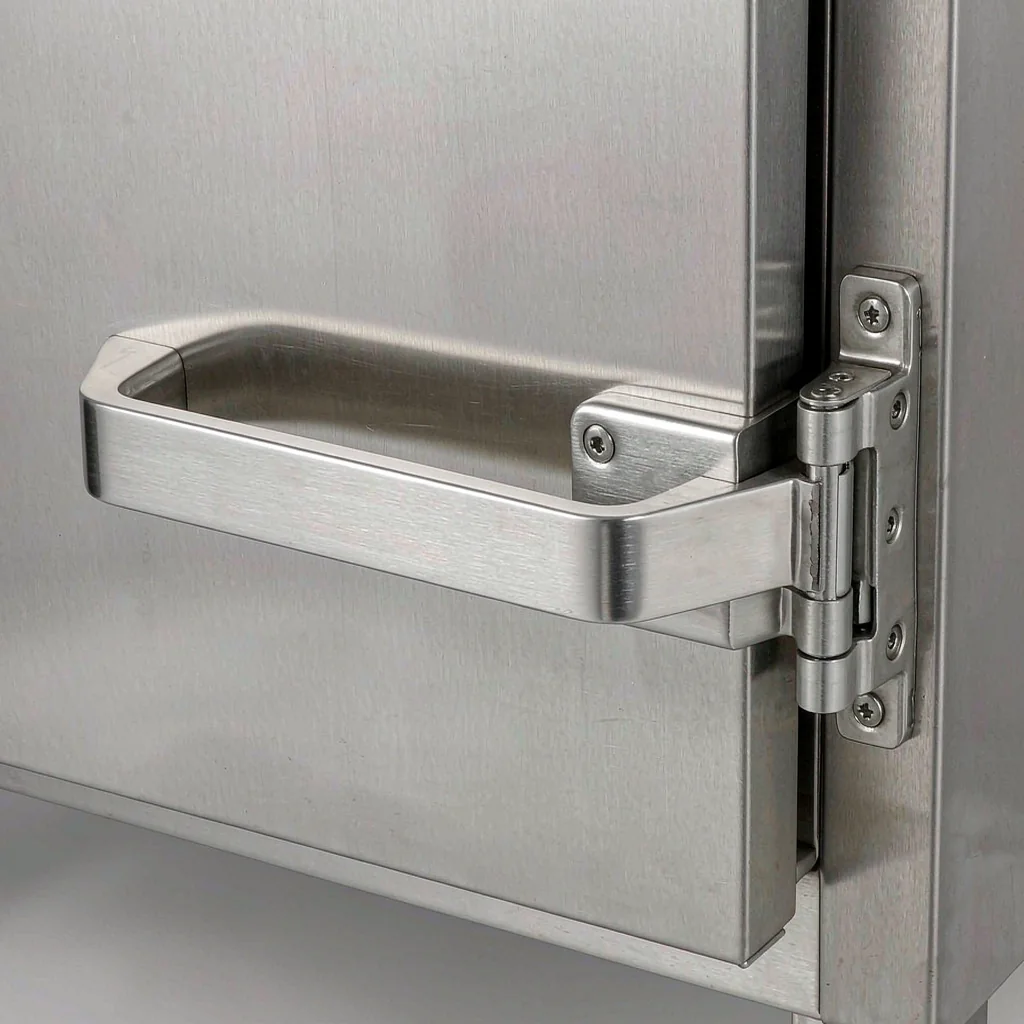
Understand the grain
A brushed surface is covered with thousands of fine parallel lines produced by an abrasive belt. Those lines are the finish, so every cleaning action should follow them, never cut across them. Before you clean a cabinet or rack, look closely to find the direction of the grain; on a vertical door it usually runs top to bottom, while on a horizontal shelf it runs front to back. Wiping across the grain leaves tiny scratches that catch the light differently and slowly turn an even satin surface into a patchy one. This is why a cloth that seems gentle can still dull a panel over time. Brushed stainless also hides fine scratches better than mirror polish, which is precisely why it is specified for high-touch retail cabinetry, lift interiors and back-of-house racks. Accept that the surface will develop a soft patina; the goal is to keep it even, not to make it look new forever.
Daily and weekly cleaning
For daily care, a soft microfibre cloth is usually enough to remove loose dust. Lightly dampen the cloth with water and a small amount of neutral pH dish soap, then wipe with the grain and dry immediately with a second clean cloth. Leaving water to air dry is the main cause of spots, especially where water contains minerals. For weekly cleaning on busier surfaces such as a display cabinet handle or a restaurant divider, use warm water and the same mild detergent, changing the cloth often so you are not dragging grit across the panel. Forgrease near a kitchen or food counter, a little isopropyl alcohol on a cloth cuts oil without harming the steel, provided you wipe dry afterwards. Always test a new product on a hidden corner first. Avoid chlorine bleach, hydrochloric acid and any cleaner whose label promises to remove tarnish; these attack the passive chromium layer and can start pitting that no amount of polishing will fully reverse.
Fingerprints, tea stains and water marks
Fingerprints are the most common complaint on brushed display cabinets and lift panels, yet they are simple to remove. Breathe on the area or dampen a cloth with warm water, then wipe along the grain and buff dry. For marks that persist, a cloth with a small amount of isopropyl alcohol works well, followed by fresh water. Tea and coffee rings are more stubborn because tannins bind to the surface. Soak a soft cloth in warm water with mild detergent, lay it over the ring for a few minutes to loosen the residue, then rub gently with the grain and rinse. Avoid using steel wool, scouring pads or hard brushes; even a stainless-specific abrasive will change the direction of the brush lines and leave a visible repair patch. On painted or PVD-coloured stainless, treat stains even more gently, since the colour layer sits on top of the steel and reacts differently to solvents. When in doubt, reduce the amount of friction before increasing it. Replace a soiled cloth often and keep a spare microfibre square in the counter drawer for quick touch-ups during opening hours.
Factory and project images are AI-generated illustrations, not photographs of a real facility or completed project.
Have a drawing ready?
Send it on WhatsApp or by email. Get grade, finish, MOQ and lead time back within 24 working hours.