
Brushed, Mirror or PVD: A Finish Guide
Brushed, mirror and PVD finishes change how stainless steel looks and performs. Compare durability, upkeep and cost to choose the right surface for the project.
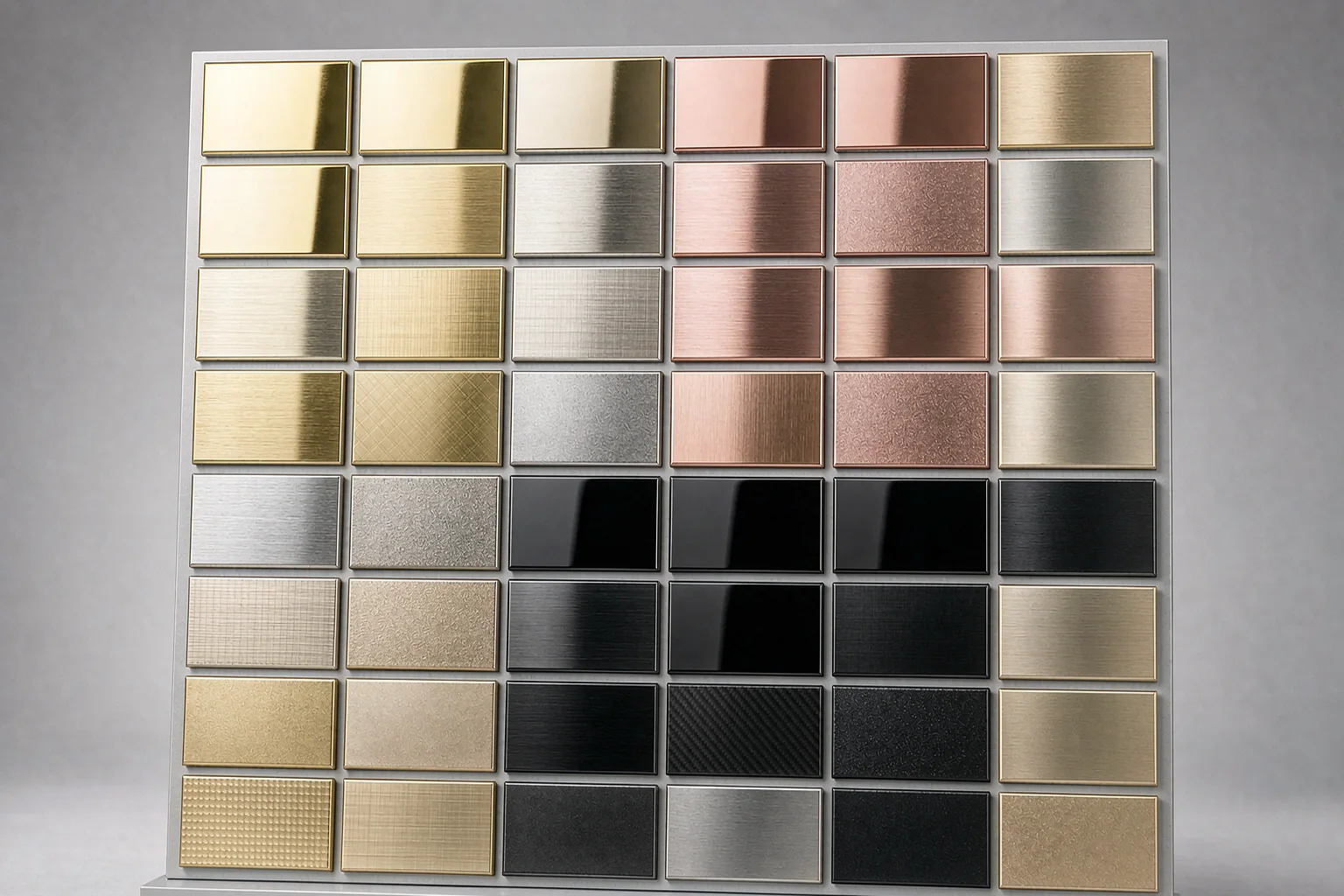
Brushed finish: the practical default
A brushed finish, also called satin or hairline, is produced by abrading the steel with fine belts to create a uniform directional grain. It is the most widely used architectural surface because it quietly hides fingerprints, light scratches and water marks, making it ideal for high-traffic areas such as lift panels, display cabinets, counter fronts and wall cladding. The grain runs in one direction, so the fabricator must keep the direction consistent across adjacent panels; a rotated panel will catch the light differently and stand out. Brushed surfaces are usually designated by standards such as No.4 or HL, but the exact look varies between mills, so approve a physical sample rather than a name. Maintenance is simple: wipe along the grain with a soft cloth and a mild detergent, never in circles. Because the abrasive process removes a thin layer of metal, very deep brushing on thin sheet can reduce corrosion resistance slightly. For most interior Southeast Asian projects, a 304 brushed sheet in 0.8 to 2.0 mm offers the best balance of appearance, cost and forgiveness.
Mirror finish: impact with a price
A mirror finish, known as No.8, is polished to a reflective, almost glass-like surface. It creates a sense of space and light, which is why it appears in hotel lobbies, jewellery counters, lift doors and feature walls. The trade-offs are practical. Mirror surfaces reveal every fingerprint, smudge and water spot, so they demand frequent wiping and careful handling during installation. They also magnify any flatness imperfection in the base sheet, meaning the substrate quality matters as much as the polishing. Protective film should stay on until the final moment and be removed slowly to avoid adhesive residue. In Southeast Asia's humidity, a mirror panel near a busy entrance can look tired by midday unless cleaning is part of the maintenance plan. Because polishing is labour-intensive, mirror sheet costs more than brushed and lead times can be longer. Use it as an accent rather than across vast areas, and pair it with brushed or PVD surfaces to keep the scheme balanced. Always approve a sample under the actual lighting of the space, since warm and cool light change the reflected tone noticeably.
PVD finish: colour without paint
PVD, or physical vapour deposition, bonds a very thin metallic coating onto stainless steel in a vacuum chamber. Unlike paint or electroplating, the layer is hard, uniform and resistant to peeling, which is why PVD colours such as gold, rose gold, champagne, black and bronze are specified for luxury retail and hospitality interiors. The colour sits on top of a base finish, so you can order a brushed-gold or mirror-black sheet, each with a completely different character. Because the coating is only a few microns thick, the quality of the base preparation and cleaning decides the result; a poorly cleaned sheet will show defects under the colour. PVD is more expensive than an uncoated finish and requires careful handling, but it delivers a consistent, durable colour that does not chip like paint. For Southeast Asian projects, PVD black and champagne are especially popular for shopfronts, display cabinets, screens and column cladding. Confirm the exact colour against a signed sample, and discuss batch-to-batch consistency if panels will be installed side by side. We can supply colored sheets and finished parts to your drawings and reply within 24 working hours.
Choosing the right surface for the project
Start with the environment and the traffic level. For a busy public corridor, brushed 304 hides wear and cleans easily, making it the safe default. For a premium jewellery counter where reflection sells the product, mirror finish creates drama but needs a cleaning routine. For a branded retail interior that must look distinctive, PVD colour delivers identity without the maintenance of paint. Budget matters too: brushed is the most economical, mirror adds polishing cost, and PVD adds a coating step. Thickness interacts with finish; very thin sheet below 0.6 mm is prone to oil-canning when used in large mirror panels, so increase the gauge or add a backing. Ask for one reference sample per finish and keep them together under the project lighting when making the final decision. Also consider how finishes meet: a brushed panel next to a mirror panel needs a clean reveal or trim to look intentional. By matching the surface to the real conditions rather than to a trend, you avoid early replacement and keep the fit-out looking sharp for years.
Factory and project images are AI-generated illustrations, not photographs of a real facility or completed project.
Have a drawing ready?
Send it on WhatsApp or by email. Get grade, finish, MOQ and lead time back within 24 working hours.