
PVD Color Consistency Across Batches
PVD colour can drift between batches even when the same code is ordered. Learn what controls shade and how to approve a reference sample for consistency.
Where colour drift comes from
PVD colour can drift between production batches even when a buyer orders the same code twice. The coating is a thin film, often only a few hundred nanometres thick, so its colour comes from interference as much as from the material itself. A small change in film thickness shifts the shade from warm champagne toward bronze, or from light gold toward rose. Chamber temperature, gas mixture, target condition and the position of a part on the rack all influence the result. Carbon-backed or titanium-based recipes behave differently, and the same nominal code from two suppliers may not match. Colour is also judged under light, so a panel approved in a factory booth can look different in a warm retail corridor. Understanding these causes turns a complaint into a controllable specification.
The role of substrate and pre-treatment
The substrate matters as much as the coating chamber. A mirror base, a fine brushed base and a coarse brushed base reflect light differently, so the same PVD recipe produces a different perceived colour on each. Polishing direction changes the highlights across a panel, which is why adjacent sheets can appear mismatched when their grain runs differently. Surface preparation is equally important: any oil, fingerprint or polishing compound left before coating creates a local difference in adhesion and tone. Parts with deep recesses may receive a slightly different film thickness on vertical faces than on flat ones. For a large architectural run, ask whether all sheets will be coated in one chamber cycle and whether the supplier can group panels by position. These details explain most of the variation that buyers notice on site.
Approving a reference and controlling batches
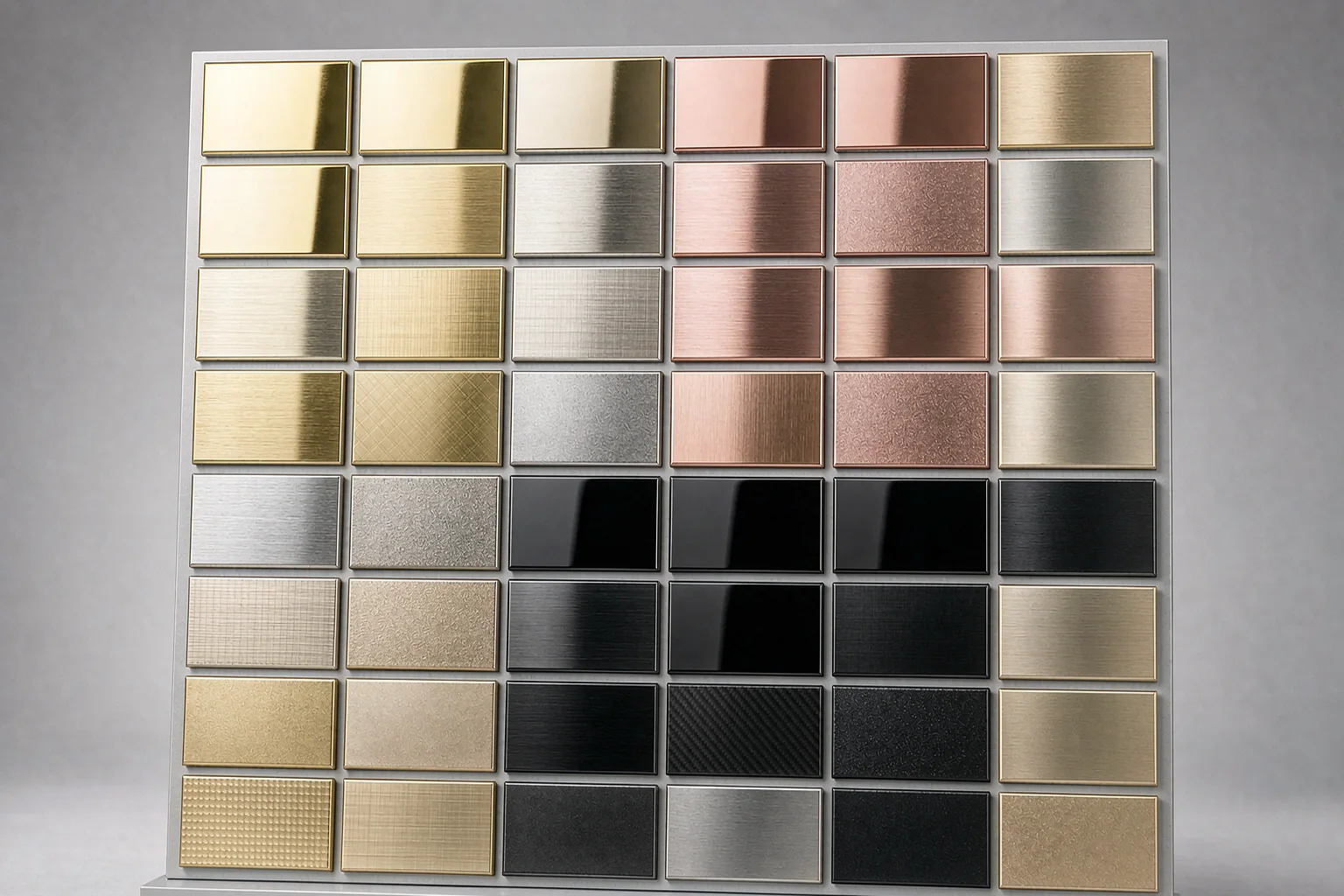
Controlling colour starts with an approved reference. Sign a physical sample under the lighting conditions of the final space and keep it as the gold standard for the whole order. Record the substrate finish, the coating code and the viewing angle on the sample label, because colour without context is hard to reproduce. For critical projects, agree a measurable tolerance with a spectrophotometer and state whether it applies across one panel or between different panels. Ask the supplier to mark batch numbers on the reverse of each sheet so that a problem can be traced to a single chamber run. When a project needs more material later, order it together with the original batch if possible. An illustrative colour matrix can help discuss options, but the signed sample remains the only reference that matters.
A practical specification for buyers
A useful colour specification is short and precise. State the grade, the base finish, the PVD code, whether one or both faces are coated, and the acceptable variation. Add the intended lighting conditions and the area where the panels will sit side by side, because a shop window and a hotel corridor judge colour differently. For mixed orders that include cabinets, screens and sheets, ask for a single coating schedule so that all components are treated together. Confirm whether protective film is removed before inspection and under what light the check is done. Our team works with coloured sheets, screens and custom display cabinets and can discuss batch consistency through WhatsApp at +86 17324671020 or email chen847415774@gmail.com, with replies within 24 working hours. Consistency is planned, not discovered at delivery.
Factory and project images are AI-generated illustrations, not photographs of a real facility or completed project.
Have a drawing ready?
Send it on WhatsApp or by email. Get grade, finish, MOQ and lead time back within 24 working hours.