
How PVD Coating Works on Steel
PVD coating bonds metal ions onto stainless steel in a vacuum, creating durable colour without paint. Understand the process and what controls quality.
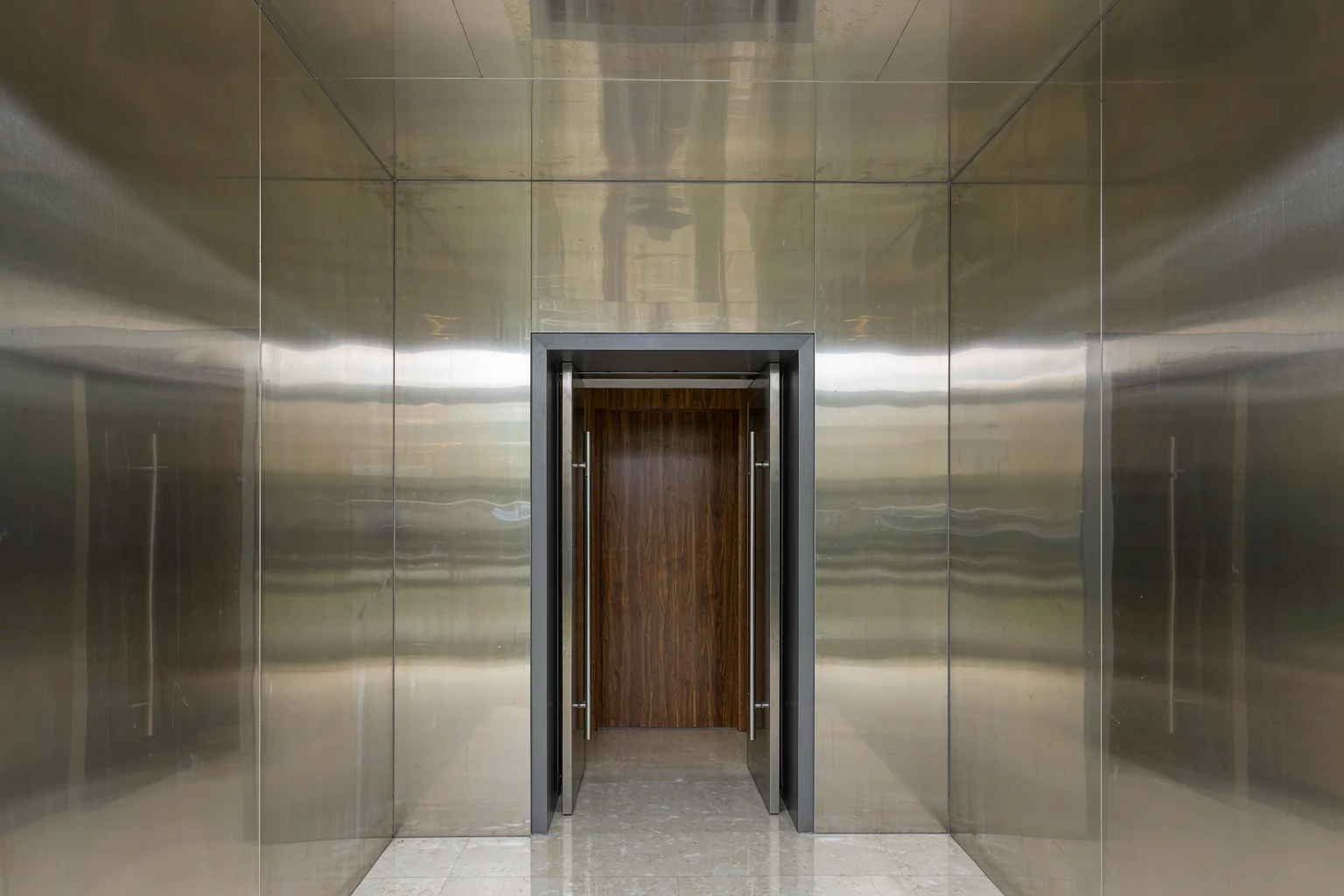
What PVD actually means
PVD stands for physical vapour deposition, a family of vacuum coating processes that turn a solid target material into a thin film on a workpiece. For stainless steel decorative sheet, the target is often titanium, chromium or zirconium, and the resulting film produces colours such as gold, rose gold, black, champagne and blue. Unlike electroplating, which uses a chemical bath, PVD happens in a sealed vacuum chamber with no liquid chemicals, which is why it is often described as a cleaner process. The film is extremely thin, typically measured in microns, yet it is hard and strongly bonded to the substrate. That is why a good PVD surface resists scratching and peeling far better than paint. The colour comes from the way the film interacts with light, so the base finish underneath still matters: a brushed base gives a soft satin colour, while a mirror base gives a bright reflective one. Understanding this helps explain why the same colour code can look different on two sheets prepared by different suppliers.
The coating sequence step by step
A PVD line follows a controlled sequence. First, the stainless sheet is cut to size and the base finish is applied and inspected, because the coating will reproduce every mark underneath. Next comes thorough cleaning: alkaline washing, rinsing and drying remove oils, polishing compound and fingerprints that would otherwise cause adhesion failures. The sheet is loaded onto a rack and placed in the vacuum chamber, which is pumped down to a very low pressure. An inert gas such as argon is introduced and ionised, and the resulting plasma bombards the target material, ejecting atoms that travel through the vacuum and settle evenly on the sheet. Reactive gases may be added to form titanium nitride or titanium carbonitride, which produce the gold and rose tones. Deposition runs for a controlled time to reach the target film thickness, then the chamber is vented and the parts cool. Finally, the coated sheet is inspected, protected with film and packed. Each step has a parameter window, and disciplined control at every stage is what separates a consistent supplier from an inconsistent one.
What controls coating quality
Several variables decide whether a PVD sheet looks premium or disappointing. Cleanliness is the biggest one: a single fingerprint or trace of polishing wax becomes a permanent defect under the coating. The base finish must be uniform, because the thin film follows the surface rather than hiding it. Chamber conditions matter too: vacuum level, gas composition, target power and deposition time are tuned for each colour, and drift in any of them shifts the shade. Film thickness, usually only a few microns, affects both colour depth and durability; too thin, and the coating wears early, too thick, and it can stress or flake. Temperature control during the cycle prevents warping on thin sheet. After coating, careful inspection under consistent lighting catches colour variation before panels ship. For buyers, the practical lesson is to treat PVD as a controlled process, not a commodity. Ask how the supplier checks colour batch to batch, request signed samples, and agree on an acceptable tolerance before production. Store coated sheets dry and keep the protective film on until installation to avoid unnecessary surface damage in transit.
Specifying PVD with confidence
When ordering PVD-coated material, give the supplier a complete brief. State the base grade, usually 304 or 316, the base finish such as brushed or mirror, the exact colour name, the sheet thickness and the panel size. Confirm whether the parts will be cut, bent or welded after coating, because post-coating fabrication can damage the film; ideally, fabricate first and coat second. Ask for a signed colour sample and a written note on batch consistency, especially when panels will be installed in a continuous run where a shade shift would be obvious. Agree on protective film, packing and storage conditions, since transit damage is a common cause of rejected sheets. For Southeast Asian projects, PVD is widely used on display cabinets, screens, colored sheets and cladding, and it pairs well with brushed stainless in mixed-metal schemes. We produce these items to your drawings and reply within 24 working hours. Reach us on WhatsApp at +86 17324671020 or email chen847415774@gmail.com to discuss your colour, finish and quantities.
Factory and project images are AI-generated illustrations, not photographs of a real facility or completed project.
Have a drawing ready?
Send it on WhatsApp or by email. Get grade, finish, MOQ and lead time back within 24 working hours.