
304 vs 316 Stainless Steel for Southeast Asia
Choosing between 304 and 316 stainless steel depends on corrosion exposure, budget and service life. A practical grade guide for fabricators in Southeast Asia.
What separates the two grades
Both 304 and 316 are austenitic stainless steels, but their chemistry changes how they perform in service. Grade 304 contains roughly 18 percent chromium and 8 percent nickel, which delivers good general corrosion resistance, cleanability and formability for everyday architectural work. Grade 316 adds about two to three percent molybdenum, an element that sharply improves resistance to pitting and crevice corrosion caused by chlorides. That single addition is why 316 is specified near swimming pools, on coastal facades and in food processing areas where salt or cleaning chemicals are present. For an interior display cabinet or a dry retail fit-out, 304 is usually sufficient and easier to source. For an exposed balcony rail or a marine-adjacent screen, the small premium for 316 buys a much longer trouble-free life. Always confirm the grade on the quotation and the delivery certificate before production begins.
Matching the grade to the environment
Southeast Asia puts stainless steel to work in hot, humid conditions, sometimes only metres from the sea. That reality should drive the grade decision more than the price list. Use 304 for interior applications such as jewelry counters, display cabinets, elevator panels and wall cladding in air-conditioned malls, where surfaces stay dry and are wiped with a soft cloth. Move to 316 for coastal resorts, pool surrounds, spa areas, kitchen equipment and any facade that receives salt-laden rain. Humidity alone rarely defeats 304, but persistent chloride deposits do, especially in sheltered crevices where moisture lingers. Think about the whole assembly too: a 316 sheet paired with a low-grade fastener or mild steel bracket will still stain at the fixing points. Specify consistent grades for visible metal, welds and hardware, and ask your supplier to confirm the mill certificate so the material on site matches the quotation.
Cost, availability and service life
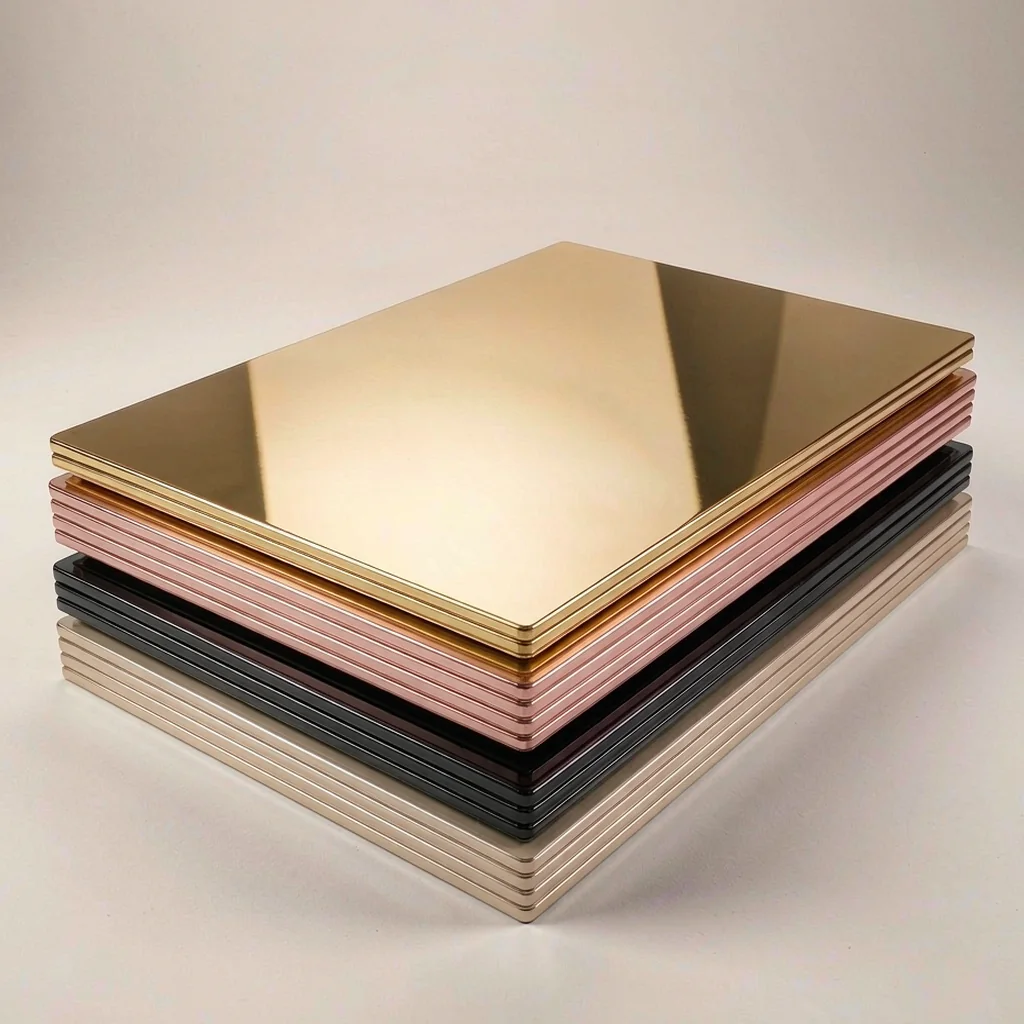
Grade 316 normally carries a noticeable premium over 304 because of its nickel and molybdenum content, and that gap moves with global alloy prices. For a large cladding area the difference can affect the budget, so it is worth asking whether every square metre truly needs the higher grade. A sensible approach is zone-based specification: use 316 on the exposed exterior and wet rooms, 304 in the dry interior. Compare the premium against the cost of replacing stained panels or closing a retail floor for maintenance a few years early. Surface finish also shapes the outcome. A No.2B or brushed finish masks light scratches and is forgiving in public areas, while a mirror finish shows every mark and needs careful handling. Sheets typically run from 0.5 to 3.0 mm for decorative work, with thicker gauges for load-bearing parts. Request the exact sheet thickness tolerance and a physical finish sample before approving production, because two suppliers can call the same brushed surface by different names.
How to specify with confidence
A clear written specification prevents most grade disputes. Start with the grade, then state the finish, sheet thickness, panel dimensions and the surface direction for brushed material. Confirm whether the part will be laser cut, bent or welded, because fabrication can change the apparent colour and finish near the heat-affected zone. Ask the supplier to state the grade on the quotation and to provide a mill certificate with the delivery, so the material can be traced back to the melt. For decorative sheets, agree on a reference sample and keep one sealed copy for comparison on arrival. Protection film, careful packing and dry storage matter as much as the alloy, since surface contamination during transit is often mistaken for poor corrosion resistance. We can produce display cabinets, screens, colored sheets, racks and custom parts to your drawings, and reply within 24 working hours. Share your drawings and dimensions on WhatsApp at +86 17324671020 or by email at chen847415774@gmail.com for a written grade and finish confirmation.
Factory and project images are AI-generated illustrations, not photographs of a real facility or completed project.
Have a drawing ready?
Send it on WhatsApp or by email. Get grade, finish, MOQ and lead time back within 24 working hours.