
Storage for Humid Back-of-House Areas
Back-of-house areas are hot, wet and hard on storage. Learn which grades, rack details and cleaning habits keep commercial shelves sound in humid kitchens.
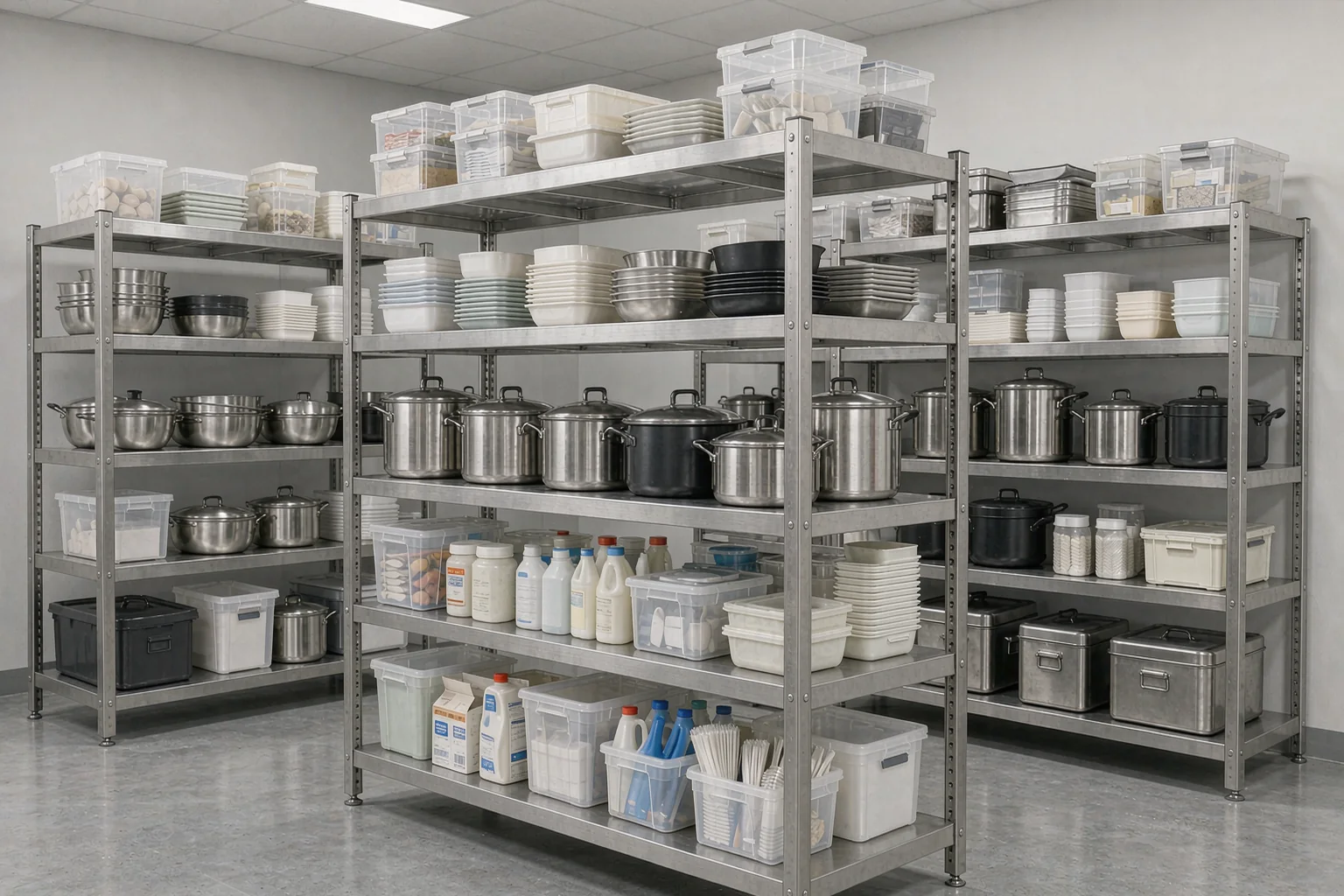
Why back-of-house is tougher than the dining floor
Back-of-house areas are harder on storage than the customer floor. Kitchens and utility rooms combine heat, steam, grease and frequent wash-downs, and the same shelf must stay clean and stable through all of it. Grade 304 is the usual baseline for commercial storage, while 316 is worth considering where salt, strong cleaners or coastal air are present. Grade 201 may look similar on delivery but is more likely to develop staining in a humid, chlorine-containing environment. The difference is most visible at welds, cut edges and any place where water sits. Choosing the grade before fabricating is far cheaper than replacing racks after a few seasons. It also helps to decide whether the storage is a wet area or a dry area, because that choice changes both the material and the fixing detail.
Rack design that drains and cleans
Good rack design removes the places where water and dirt collect. Open wire or slatted shelves dry faster than solid panels, and a small gap between the shelf and the wall allows air to move behind it. Avoid deep decorative channels that hold liquid, and specify rounded edges that can be wiped in one pass. Shelf levels should be far enough apart for containers to be cleaned underneath, and the lowest tier should sit clear of the floor for mopping. Adjustable feet matter on uneven kitchen floors, and a wall fixing is wise for tall units that might tip when loaded unevenly. Where bins are stored, a lip or rail keeps them from sliding. Give the supplier the intended load per level and the maximum container height, because those two figures decide the safe span of a shelf.
Finish and corrosion details
Finish and corrosion details decide how a rack ages. A brushed surface hides fingerprints and fine scratches better than a mirror finish, which is one reason it suits busy back-of-house areas. Welds should be cleaned and passivated so the chromium oxide layer can reform, especially on parts that will face steam and cleaning chemicals. Keep stainless away from carbon steel shelving or tools that shed iron particles, since embedded iron will rust and stain the surface. PVD colour finishes look attractive but are usually a poor choice for heavy wet areas where abrasion is constant. Seal cut ends and avoid crevices created by overlapping plates. If the rack supports hot equipment, ask whether the finish and the fixings tolerate repeated temperature changes. These details cost little at specification time and a lot to correct later.
Specification and upkeep
Clear information at the enquiry stage prevents most storage problems. Provide the room dimensions, the grade and finish you want, the intended load per shelf and whether the area is washed down daily. Ask for the sheet thickness, tube diameter and foot material in writing, because those numbers separate a durable rack from a light display unit. A finish sample and a short drawing are enough for the workshop to plan fabrication. If several rooms are being fitted out, label each rack so it can be installed in the right location. Our team works with racks, bending parts and custom fabrications and can review your specification through WhatsApp at +86 17324671020 or email chen847415774@gmail.com, with replies within 24 working hours. A rack that drains, cleans and resists the environment will outlast a cheaper one that only looks fine on day one.
Factory and project images are AI-generated illustrations, not photographs of a real facility or completed project.
Have a drawing ready?
Send it on WhatsApp or by email. Get grade, finish, MOQ and lead time back within 24 working hours.