
Why a Simple Drawing Speeds Up Your Quotation
A clear sketch can cut days from a stainless quotation. Learn which dimensions and finish notes help a supplier price your part accurately on the first pass.
What a supplier must assume without a drawing
A supplier who receives only a description must guess the details that determine price. Without a drawing, the workshop assumes an inside bend radius, a hole position, a datum face and a tolerance. Each assumption is usually conservative, because nobody wants to quote a part that might fail inspection. The result is a higher number and a longer conversation, followed by revisions once the real geometry arrives. A simple drawing removes that guesswork at the first pass. It does not need to be a fully toleranced engineering file at the enquiry stage; even a dimensioned sketch communicates intent far better than prose. The key is to state which features are critical to function and which are cosmetic. That single distinction lets the supplier decide where accuracy costs money and where it does not.
The minimum drawing that still works
A workable enquiry drawing only needs a handful of elements. Give the overall width, height and depth, the material grade and thickness, and the location and direction of every bend. Mark the visible faces, because polishing or coating one side costs more than treating both sides uniformly. Add a note on the surface finish, such as brushed, mirror or PVD colour, and state the quantity you expect to order. Include units explicitly; mixing millimetres and inches is a classic source of error. A DXF or DWG file with a PDF dimension sheet is ideal, but a clean photograph of a hand sketch can start the conversation. Number each revision and keep a single master file so that later discussions refer to the same version. This discipline costs minutes and saves days.
How drawings reduce rework and revision cycles
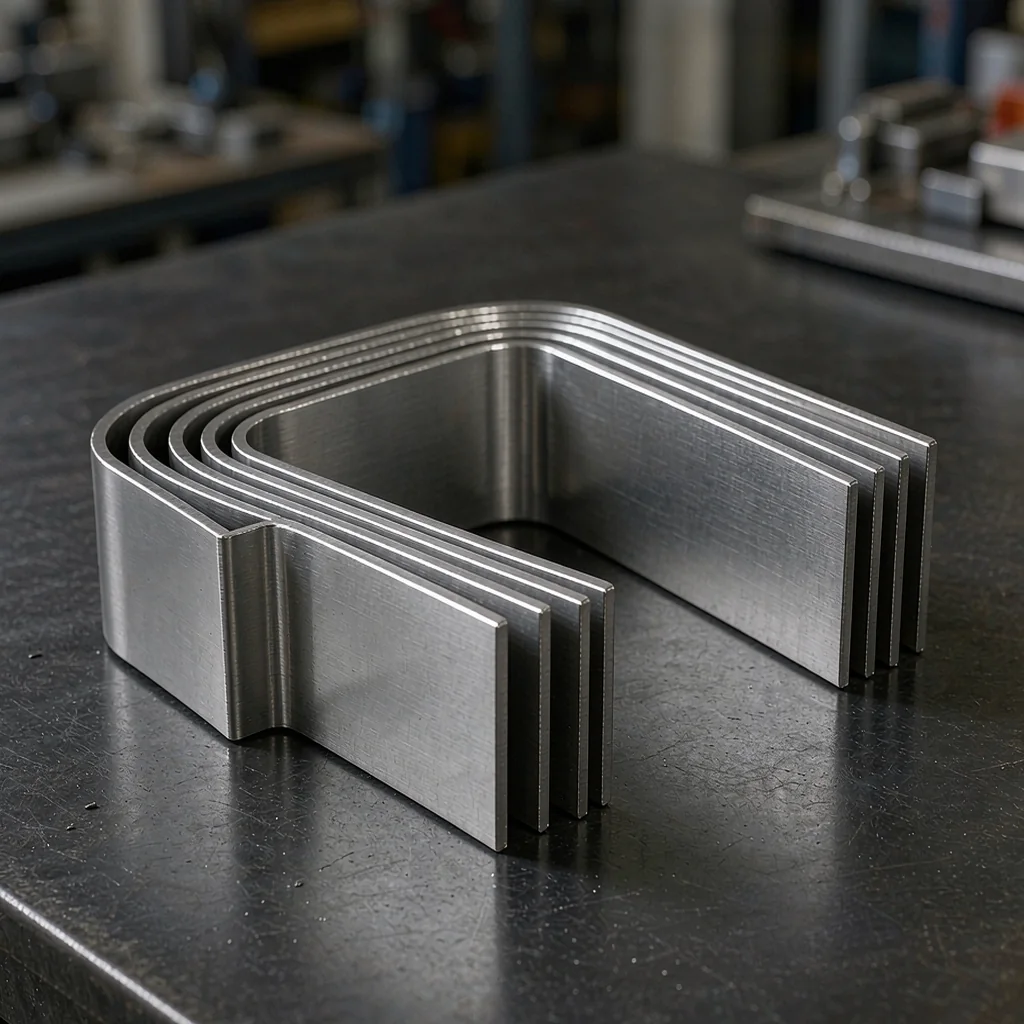
Drawings shorten the quotation cycle because they reduce the number of questions that must travel back and forth. Each unanswered question is a round of messages, and each round delays the start of production. More importantly, a drawing lets the workshop plan nesting, tooling and inspection before committing to a price, which reduces the chance that the first batch is rejected. When the drawing specifies the datum and the bend sequence, the operator can reproduce the part consistently on later orders. For repeat customers, an approved drawing becomes a reference that protects both sides when a tolerance dispute arises. If the design changes after approval, issue a new revision rather than editing the old file, so the history stays clear. An illustrative image may show the finished shape, but it never replaces dimensions.
Sending your drawing the right way
Send the drawing with a short written summary that repeats the grade, thickness, finish and quantity in the message body. Name the file with the part number and revision date so it stays identifiable after it leaves your inbox. If you are comparing several suppliers, send exactly the same package to each one, otherwise the quotes cannot be judged side by side. Ask the supplier to confirm the assumptions they made, especially around bend radius and tolerance, before you accept the price. Our team reviews drawings for custom display cabinets, screens, coloured sheets, racks, aluminium carving and bending parts. Send your file through WhatsApp at +86 17324671020 or email chen847415774@gmail.com and expect a structured reply within 24 working hours. A clear drawing is the fastest way to turn an idea into a price you can trust.
Factory and project images are AI-generated illustrations, not photographs of a real facility or completed project.
Have a drawing ready?
Send it on WhatsApp or by email. Get grade, finish, MOQ and lead time back within 24 working hours.