
Packing Stainless Steel for Shipping
Sea freight exposes stainless products to salt, moisture and movement. Learn the packing sequence, from film and desiccant to crates, that keeps panels intact.
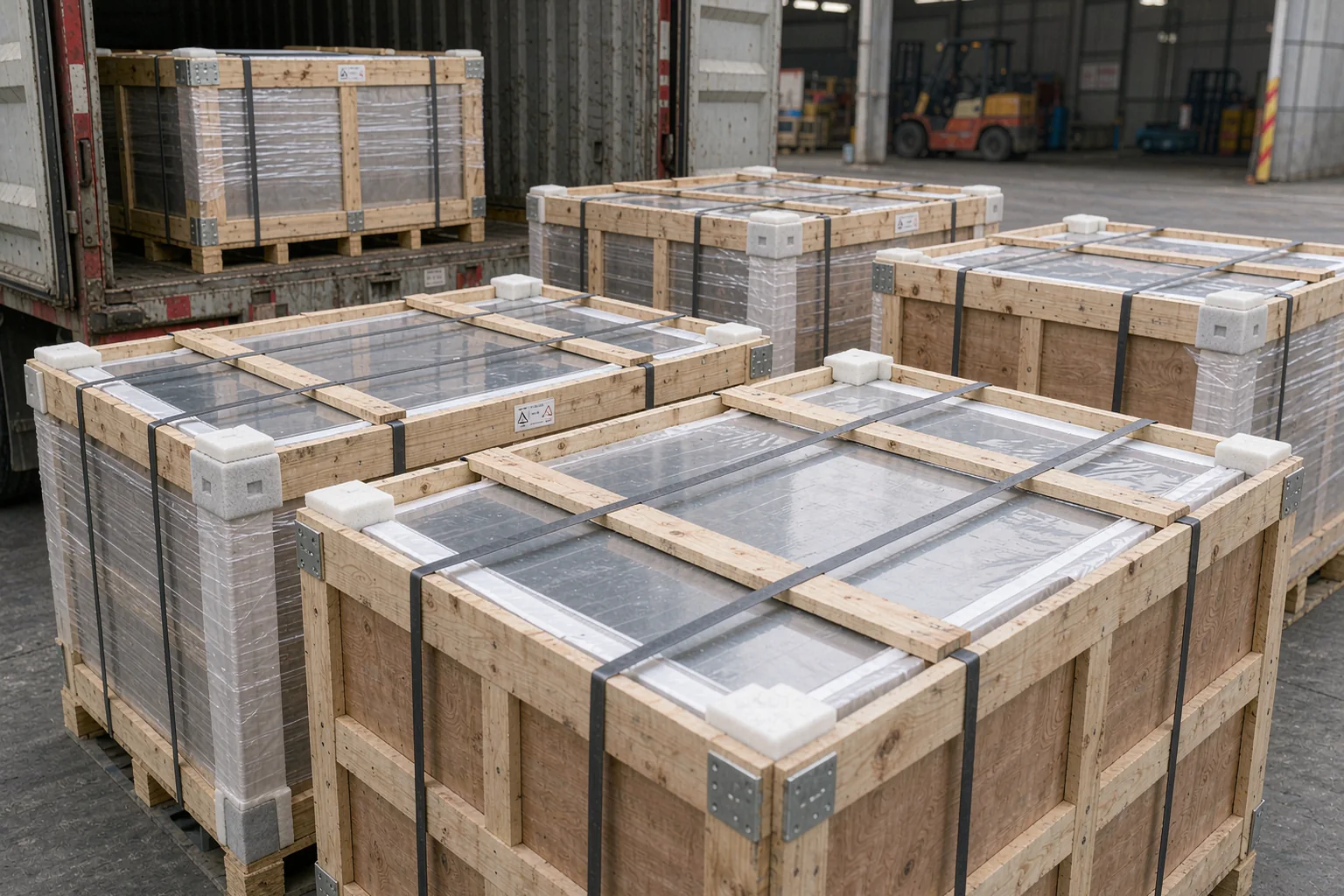
Why sea freight is harder than road transport
Sea freight is a harsher environment than road transport, and stainless steel is not immune to it. Containers cross large temperature ranges, so warm air condenses on cool metal surfaces and leaves a thin film of water. Add salt in coastal air and the chloride concentration on a panel surface can rise enough to cause tea staining or pitting on grade 304, especially near welds and cut edges. Vibration is the second problem: a cabinet that shifts inside a crate can rub against its neighbours and lose its protective film. Stacked cargo adds pressure that bends thin sheets. Planning for these conditions is cheaper than replacing damaged goods at the destination. Start by deciding how long the cargo will be at sea and whether it will wait in a hot yard before loading. Those two facts determine how much protection is reasonable.
The packing sequence that works
A reliable packing sequence starts with a clean, dry surface. Wipe off fingerprints, oil and cutting residues before applying film, because trapped contamination becomes a stain under plastic. Use a neutral film that does not leave adhesive on mirror or PVD finishes, and overlap seams so moisture cannot creep underneath. Protect every edge with foam or cardboard guards, since corners take the most impact during handling. Separate panels with soft spacers rather than stacking them face to face. Add desiccant sachets in proportion to the crate volume and place them where air can circulate, then seal the inner wrap. For long voyages, a second outer layer and a moisture barrier bag give useful redundancy. Photograph each step so a buyer can see how the goods were prepared before the container was closed.
Crating, pallets and container loading
Crating and loading turn good wrapping into actual protection. Export timber packaging should be dry, clean and strong enough to resist stacking; avoid untreated wood that can transfer moisture or splinters. A wooden crate should hold the product firmly with no internal movement, yet allow a forklift to lift it safely from the base. Mark the crate with weight, orientation and handling symbols on at least two faces. Do not load stainless near acidic or corrosive cargo, and keep it away from carbon steel items that can shed iron particles. Inside the container, secure the crates with straps or timber bracing so they cannot walk during the voyage. Leave a small air gap around the stack where possible to reduce condensation. If you need help planning packing for a mixed order, our team can review the list through WhatsApp at +86 17324671020 or email chen847415774@gmail.com, with replies within 24 working hours.
Documentation and handover checks
Documentation is part of the packing job. The packing list should state crate numbers, contents, net and gross weight, and dimensions, so the buyer can check the shipment without opening everything. Include photos of the wrapping, desiccant placement and final crate before sealing. Share the packing list with the buyer before departure so missing information can still be corrected. Mark cartons with a clear product reference that matches the commercial invoice, because mixed shipments are easily misrouted at a transshipment port. On arrival, inspect while the container is still accessible: check for water marks, crushed corners and film damage, and photograph any issue immediately. Dry any condensation gently and keep the packaging until the claim is settled. A little discipline at the packing stage protects both the product and the commercial relationship.
Factory and project images are AI-generated illustrations, not photographs of a real facility or completed project.
Have a drawing ready?
Send it on WhatsApp or by email. Get grade, finish, MOQ and lead time back within 24 working hours.