
Decorative Screens for SEA Hospitality
Decorative stainless screens give hotels and restaurants identity, privacy and airflow. Learn how pattern, grade and finish hold up in Southeast Asia.
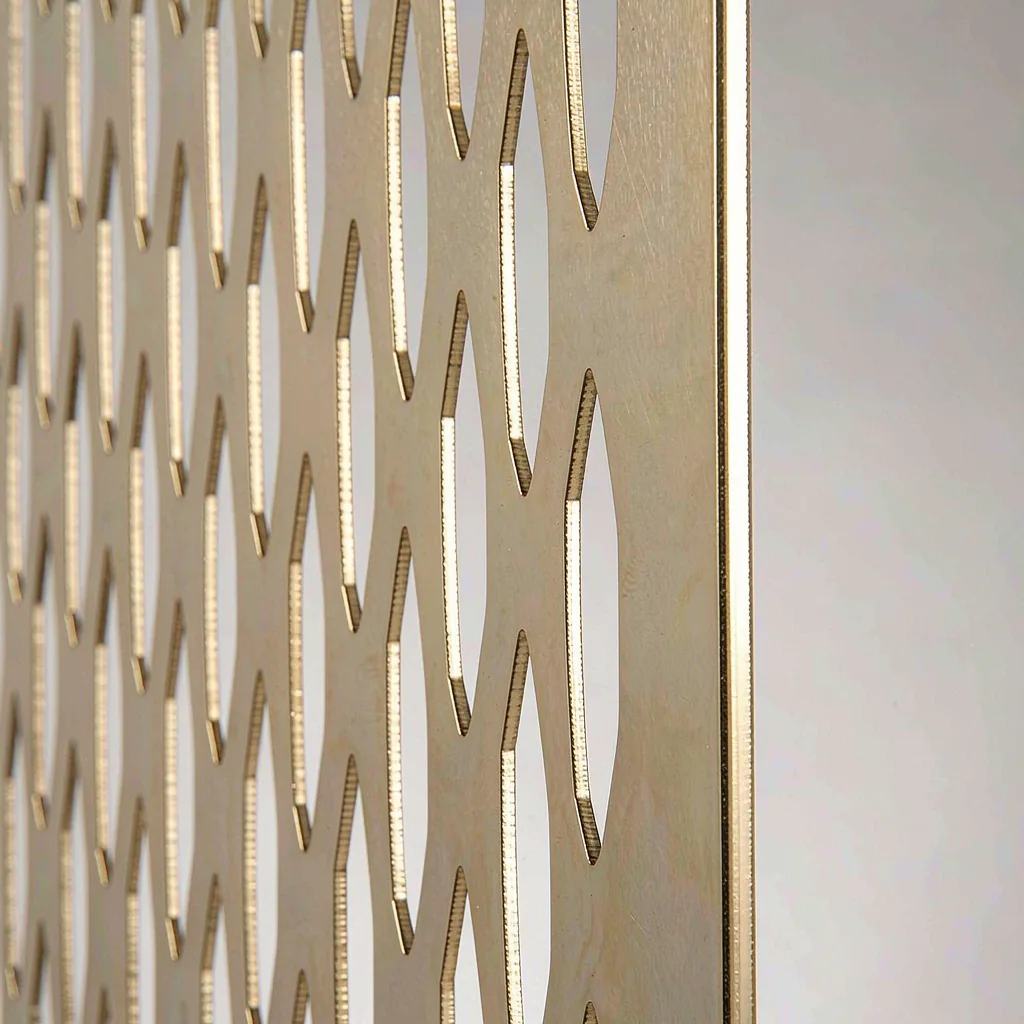
Where screens work in hospitality
In hotels and restaurants, a decorative screen does several jobs at once. It defines zones in an open lobby, hides service areas from guests, creates intimate dining pockets and frames a view without closing it off. A bamboo or botanical motif can express local character, while a geometric lattice reads as modern and cosmopolitan. Common locations include reception backdrops, restaurant partitions, spa corridors, lift lobbies, bar fronts and balcony screens. Because the panel is metal, it handles heavy traffic better than timber and does not warp in humidity. Designers often repeat the same motif across several areas to build a coherent brand language, changing only the finish to suit each space. A gold PVD screen behind reception, a brushed version in the restaurant and a darker tone at the bar create unity with variety. Compared with a solid wall, a screen keeps the floor visually connected and lets air and light move, which supports the relaxed, open atmosphere that hospitality spaces aim for.
Designing for the tropical climate
Southeast Asia's heat, humidity and, in many cities, salt-laden air shape material choices. For an interior screen in an air-conditioned lobby, 304 stainless steel in a brushed or PVD finish performs well and is easy to wipe clean. For a coastal resort, an open-air restaurant or a poolside divider, step up to 316 to avoid tea stains at cut edges and fixings. The finish also matters: a brushed surface hides the fingerprints that guests leave on a reception backdrop, while mirror shows every smudge and needs daily attention. Think about cleaning access. A full-height perforated panel collects dust in its openings, so the design should allow a technician to reach both sides or remove sections. Avoid patterns with tiny blind pockets where dirt and moisture can sit. If the screen doubles as a balustrade infill, check local building rules for height and load requirements before fabrication. Finally, discuss fire performance with the project consultant: while stainless steel itself is non-combustible, any timber or fabric combined with the screen may need to meet fire regulations in public venues.
Pattern, finish and working with a supplier
A screen is a signature element, so treat the pattern as part of the brand. Start with a vector file and confirm the open-area ratio, panel module and how motifs align at the joins. Ask to see a small sample before committing to a full wall, because scale changes how a pattern reads. For finish, brushed 304 is the workhorse, PVD gold or champagne adds warmth in luxury settings, and PVD black creates a sharp contemporary line. Mixing two finishes within one screen is possible but should be deliberate, with a clean break between zones. Provide the supplier with panel dimensions, grade, finish, thickness and the installation method, and ask how panels are numbered and packed for site assembly. For a hotel fit-out with many identical rooms, a master sample signed off early becomes the acceptance standard for every subsequent batch. We manufacture decorative screens and related metalwork to drawings and reply within 24 working hours. Share your pattern and dimensions on WhatsApp at +86 17324671020 or by email at chen847415774@gmail.com for a written layout and quotation.
Factory and project images are AI-generated illustrations, not photographs of a real facility or completed project.
Have a drawing ready?
Send it on WhatsApp or by email. Get grade, finish, MOQ and lead time back within 24 working hours.